Skip to content

Results

Innovation, Strategy, Execution: Success Stories

8 case studies, including six featured transformations, Cohere and COHIS. Each is set out as situation, challenge, strategy, product or program, execution, result and role.

30+

Years of healthcare, technology and entrepreneurship

$1B+

Collective actuarially certified healthcare savings across developed programs

$95M

HealthHelp acquisition by WNS

$40M

CareGain acquisition by Fiserv

$775M

Fiserv Health acquisition by United

200+

Industry conferences and presentations

Outcome visual

What happened to the companies

Acquisitions, mergers and divestitures across the company portfolio. Explore the roles and product work behind each story on the Career page.

  • CareGainAcquisition / 2006
    Dr. Gupta’s role
    Founder/President/COO
    1. CareGain
    2. Fiserv
    3. PayFlex
    4. Aetna

    CareGain was acquired by Fiserv for $40M in January 2006. The CareGain business later traveled through PayFlex to Aetna.

    Terms: $40M acquisition value

  • Fiserv HealthAcquisition / 2007
    Dr. Gupta’s role
    EVP, Global Healthcare Strategy
    1. Fiserv Healthcare Businesses
    2. UnitedHealthcare

    Fiserv healthcare businesses were acquired by UnitedHealthcare in 2007 for approximately $775M. The Wall Street Journal reported the acquisition agreement on November 2, 2007.

    Acquisition announcement

    Terms: Approximately $775M announced transaction value

  • HealthHelpAcquisition / 2017
    Dr. Gupta’s role
    President, Chief Strategy Officer; previously Chief Strategy & Products Officer
    1. HealthHelp
    2. WNS

    After becoming President, Gupta led HealthHelp to its acquisition by WNS for $95M in March 2017.

    Terms: $95M acquisition value

  • IncentOneAcquisition / 2013
    Dr. Gupta’s role
    Interim Chief Healthcare Products/Strategy Officer and Sales Leadership
    1. IncentOne
    2. Welltok

    Welltok acquired IncentOne in 2013. Financial terms: Undisclosed. The product and business transformation preceded the transaction.

    Terms: Undisclosed

  • NeuVisStrategic Acquisition
    Dr. Gupta’s role
    Founding Member / Exec. Director of Healthcare Solutions
    1. NeuVis
    2. Rational Software
    3. IBM

    Rational Software acquired NeuVis; IBM subsequently acquired Rational.

  • Hinduja Healthcare Services → SagilityPre-Acquisition Transformation
    Dr. Gupta’s role
    C-Suite and CEO (Ram Gopalan) Management Consultant for UM Strategy
    1. Hinduja Healthcare Services
    2. BPEA
    3. Sagility

    Following the January 2022 BPEA transaction, the healthcare business separated from Hinduja and became Sagility.

  • HealthperDivestiture
    Dr. Gupta’s role
    Co-Founder/President
    1. Healthper
    2. Founder Divestiture
    3. CTO Continuation

    Gupta chose to divest his ownership to pursue other ventures. His CTO acquired the business and continued operating it.

  • Dr. Gupta’s role
    Exec. Management Consultant
    1. Partner Medicine / Healsa
    2. Atlantic Health

    Helped developed the concierge-medicine online platform to service the patients directly. The practice merged with Atlantic Health subsequently.

  • Pieces TechnologiesAcquisition / 2025
    Dr. Gupta’s role
    Healthcare AI / Product strategy advisor
    1. Pieces Technologies
    2. Smarter Technologies

    Smarter Technologies acquired Pieces Technologies, announced September 30, 2025.

    Acquisition announcement
  • DataEase InternationalAcquisition / 1991
    Dr. Gupta’s role
    Lead Enterprise Sales
    1. DataEase
    2. Sapphire, UK

    DataEase was acquired by Sapphire, UK in 1991.

  • Rapid Enterprise Inc. / REIAcquisition / 1994
    Dr. Gupta’s role
    Led rapid application development group (won PC Week Magazine Award)
    1. Rapid Enterprise
    2. Symantec Corporation

    Symantec Corporation acquired the Rapid Enterprises division from DataEase International in January 1994 for $7.5M.

    Terms: $7.5M

Open the full company portfolio

Case 01 / Founder

CareGain

HealthcareIRA™ — Origin of Health Savings Accounts

Company record and outcome HSA policy & product timeline

$40M

CareGain acquisition by Fiserv

~25%

Employer-savings estimate quoted in Workforce (2002)

2 → 200+

Employee growth from founding to exit

HealthcareIRA™ / Original invention

Father / Founder of HSAs

Amit K. Gupta, MD originated HealthcareIRA™, the healthcare-account model on which HSA legislation was written. He wrote the foundational patent and is its sole named inventor.

To commercialize his invention, Gupta brought in David Lenihan, a former banker and financier, and together they co-founded CareGain. The origin of HealthcareIRA™ and HSAs was Gupta’s; the company was built with a business partner.

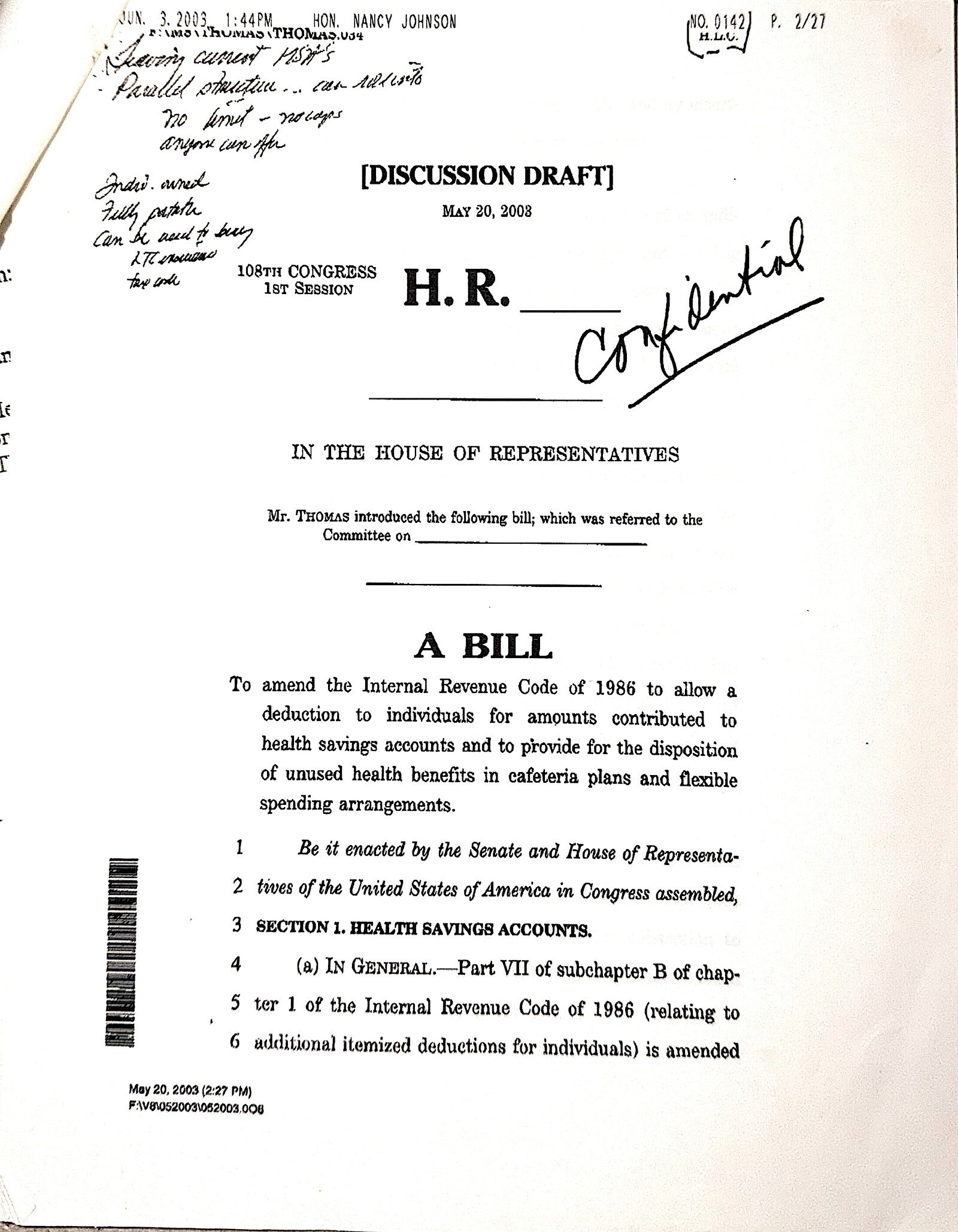
“Nancy would like your comments on this.”
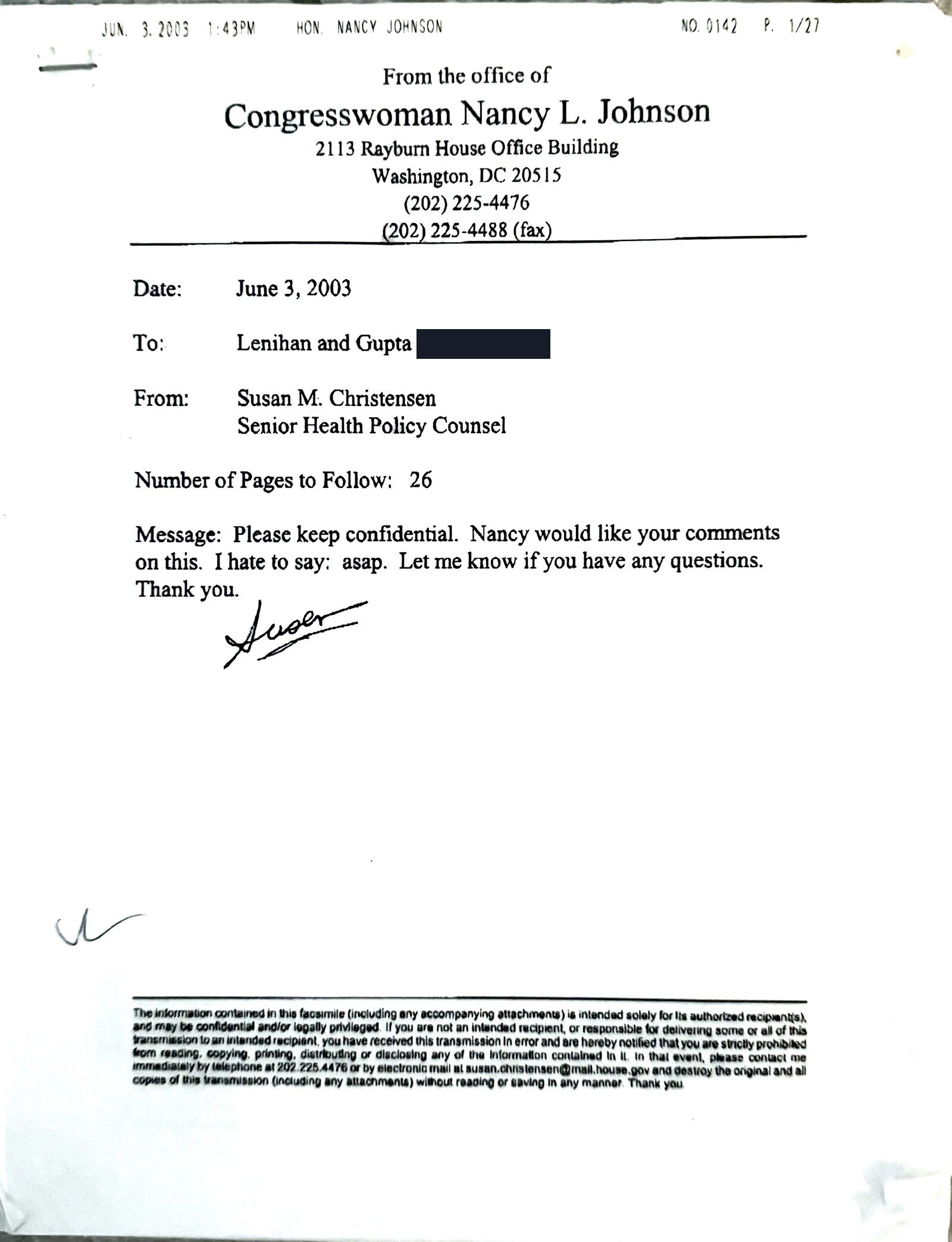
From Congresswoman Nancy L. Johnson’s office — June 3, 2003
June 3, 2003 fax cover sheet from Congresswoman Nancy L. Johnson’s office to Lenihan and Gupta, requesting comments on the accompanying materials.
June 3, 2003 — Nancy Johnson’s office requests comments from Lenihan and Gupta on the accompanying 26 pages.
May 20, 2003 House discussion draft transmitted June 3, 2003, with handwritten annotations and Section 1 headed HEALTH SAVINGS ACCOUNTS.
May 20, 2003 — Annotated discussion draft: “SECTION 1. HEALTH SAVINGS ACCOUNTS.” Transmitted with the June 3 correspondence.

HEALTHCAREIRA / Historical trademark record

Filing date
May 25, 2001
Serial number
78065925
Registration number
2859097
Registration date
June 29, 2004
Register
Supplemental
Classes
036, 042
Recorded status
Cancelled
Status date
February 4, 2011
01 Situation
Originated HealthcareIRA™, the model on which HSA legislation was written, and authored its foundational patent as the sole named inventor. Brought in former banker and financier David Lenihan to co-found CareGain in 2001 and commercialize the invention: personal healthcare accounts, portability, long-term accumulation of funds and individual control of healthcare spending.
02 Challenge
Create the product and infrastructure needed to make consumer-directed healthcare practical for payers and employers.
03 Strategy
Originated HealthcareIRA™, the model on which HSA legislation was written, and wrote the foundational patent as its sole named inventor.
04 Product / Program
HealthcareIRA™ / HSA, HRA & FSA benefit-management portal; Pharmacy & provider quality-comparison decision support; Consumer-directed healthcare payment processing & debit-card integration
05 Execution
Originated HealthcareIRA™, the model on which HSA legislation was written, and wrote the foundational patent as its sole named inventor. Brought in former banker and financier David Lenihan to co-found CareGain and commercialize HealthcareIRA™. Worked with legislators to develop Health Savings Accounts legislation and advised House Ways and Means Chairman Bill Thomas and Health Subcommittee Chairwoman Nancy Johnson on tax treatment for Health Reimbursement Accounts and HealthcareIRA™ / Health Savings Accounts. Provided further HSA guidance to the U.S. Treasury Department and Internal Revenue Service (IRS) in 2004. Developed healthcare-account and HSA infrastructure for payer and employer distribution. Connected product development, patents, strategy, financing and commercialization. Raised $8M in strategic and venture financing and secured distribution endorsements from AHIP and the Blue Cross Blue Shield Association.
06 Result
Father / Founder of HSAs: originated HealthcareIRA™, the model on which HSA legislation was written, and worked directly with Congressional healthcare leadership on its legislative development, followed by Treasury and IRS guidance. Commercialized the invention through CareGain and scaled the platform into a business acquired by Fiserv for $40M. CareGain was acquired by Fiserv for $40M in January 2006. The CareGain business later traveled through PayFlex to Aetna. Financial terms: $40M acquisition value.
07 Dr. Gupta's Role
Founder/President/COO

CareGain / Policy & product milestones

HealthcareIRA™ & the development of HSAs

Product invention, Congressional advocacy, Treasury and IRS guidance, and commercialization.

  1. March 2001

    Filed the foundational HealthcareIRA™ patent

    Gupta AK. SYSTEM AND METHOD FOR MANAGEMENT OF HEALTH CARE SERVICES. Gupta wrote the patent and is its sole named inventor. His HealthcareIRA™ invention combined individual healthcare accounts, benefits administration, health information and long-term healthcare financial planning.

    Publication #
    WO2002077764 A3
    Application #
    PCT/US2002/008663
    Publication date
    May 1, 2003
    Current owner
    Aetna, Inc.
  2. 2001

    Co-founded CareGain to commercialize HealthcareIRA™

    Having originated the HealthcareIRA™ model, Gupta brought in former banker and financier David Lenihan as a company co-founder to commercialize the invention.

  3. 2001–2003

    HealthcareIRA™ as the basis for HSA legislation

    HSA legislation was written on Gupta’s HealthcareIRA™ model. He worked directly with House Ways and Means Chairman Bill Thomas and Health Subcommittee Chairwoman Nancy Johnson on its legislative development and tax treatment. Correspondence from Johnson’s office on June 3, 2003 requested comments from Gupta and Lenihan on the accompanying materials.

  4. February 2002

    Workforce describes the CareGain model and savings

    Shari Caudron described CareGain’s personal healthcare accounts, shared unused balances and employees’ ability to take accumulated funds when leaving an employer. The article quoted Gupta’s average employer-savings estimate and illustrated the economics with a 100-employee client example.

    Quoted average employer savings
    About 25% — Gupta’s reported estimate
    Client example
    100 employees
    Annual premiums
    $800,000 → $490,000
    Premium reduction
    $310,000
    Employee accounts funded
    $250,000 total; $2,500 per employee
    Upfront savings
    $60,000
    Conditional additional savings
    $87,500 if only 30% of account funds are used
    Workforce — February 2002, pp. 28–34 (online archive: June 20, 2002)
  5. 2002

    Future healthcare savings — documented by EBRI

    EBRI recorded Gupta’s vision of employees saving for future healthcare expenses through CareGain’s model—the long-term healthcare-savings principle that later became central to HSAs.

    “employees will respond to an opportunity to save for future health care expenses, which will lead to real cost savings for the employers today, which is where CareGain is turning the theory into practice.”

    Amit K. Gupta, MD — CareGain, 2002

    EBRI, Consumer-Driven Health Benefits: A Continuing Evolution? (2002), p. xix
  6. 2003

    Health Savings Accounts enacted into federal law

    The federal HSA framework became law, bringing the consumer-owned healthcare-account model originated as HealthcareIRA™ into federal legislation.

  7. April 14, 2004

    U.S. 1 calls CareGain a healthcare-savings pioneer

    Barbara Fox reported CareGain’s major CIGNA contract and linked its expansion to the December 2003 HSA legislation. The article described growth from four employees two years earlier to 30 employees, alongside plans to hire 75–100 people. CareGain’s Defined-Care platform would support the CIGNATURE suite, planned for benefit plans starting after January 1, 2005.

    “a pioneer in the area of healthcare savings accounts”

    U.S. 1 Newspaper — Barbara Fox, April 14, 2004

    “Life in the Fast Lane” — U.S. 1 Newspaper
    Reported employee growth
    4 employees in 2002 → 30 in 2004
    Reported hiring plans
    75–100 people; planned, not reported as completed
    Major implementation
    CIGNA HealthCare / CIGNATURE suite
  8. 2004

    U.S. Treasury & IRS guidance

    Provided further HSA guidance to the U.S. Treasury Department and Internal Revenue Service (IRS).

  9. 2004

    NJTC investment & New Jersey recognition

    CareGain received investment from the NJTC Venture Fund, backed in part by the New Jersey Economic Development Authority, and was recognized during Governor James E. McGreevey’s administration as its consumer-directed healthcare platform expanded.

  10. September 24, 2004

    CareGain mentioned in a CRS Report for Congress

    The Congressional Research Service’s Health Savings Accounts report (RL32467) identifies Evolution Benefits with CareGain among announced integrated HSA products. This is a research mention of an HSA offering, not a congressional endorsement.

    CRS Report for Congress, RL32467 — p. CRS-14 (PDF page 17)
  11. 2006

    CareGain acquired by Fiserv

    Commercialized HealthcareIRA™ through CareGain, raised $8M in strategic and venture financing, and transacted the company to Fiserv for $40M in January 2006.

CareGain & HSA history — full CV

Case 02 / Enterprise Strategy

Fiserv Health

Enterprise Healthcare Strategy

Company record and outcome

$775M

Fiserv Health acquisition by United

01 Situation
Retained after Fiserv acquired CareGain to bring together strategy across its different healthcare businesses.
02 Challenge
Consolidate multiple healthcare businesses and banking capabilities into a coherent healthcare strategy and operating model.
03 Strategy
Developed cross-business healthcare strategy spanning CareGain, Wausau Benefits, Avidyn Health and related units.
04 Product / Program
Integrated healthcare strategy & operating model
05 Execution
Developed cross-business healthcare strategy spanning CareGain, Wausau Benefits, Avidyn Health and related units. Connected Fiserv banking and healthcare capabilities with healthcare-business integration and operating-model work.
06 Result
The strategy and integration work contributed to positioning the healthcare portfolio for its subsequent sale to UnitedHealthcare. Fiserv healthcare businesses were acquired by UnitedHealthcare in 2007 for approximately $775M. The Wall Street Journal reported the acquisition agreement on November 2, 2007. Financial terms: Approximately $775M announced transaction value.
07 Dr. Gupta's Role
EVP, Global Healthcare Strategy

Case 03 / Executive Leadership

HealthHelp

Clinical Programs, Growth & Executive Leadership

Company record and outcome

$35M → $60M+

Revenue growth during executive tenure

~$5M

EBITDA growth

$20M+

Revenue associated with new programs and enhancements

$95M

HealthHelp acquisition by WNS

500+

Employees

01 Situation
Joined in January 2014 as Chief Strategy & Products Officer and became President, Chief Strategy Officer in June 2016, with responsibility for overall P&L, a book of business exceeding $60M and end-to-end client experience.
02 Challenge
Restructure products, health informatics, client services, strategy and clinical programs while building a scalable healthcare-management business.
03 Strategy
Restructured product strategy, health informatics and client-service delivery.
04 Product / Program
Collaborative specialty utilization-management programs; Integrative Oncology; Protos clinical rules & authorization engine; Spend-reduction products: Site, Scope, Triage, Direct, Concierge & Access; Utilization-reduction products: Consult, Access, Inform, Guide & Alert; Provider Score, savings valuation & risk / predictive analytics
05 Execution
Restructured product strategy, health informatics and client-service delivery. Expanded specialty clinical programs and product enhancements with responsibility for a book of business exceeding $60M. Advanced an educative, collaborative utilization-management model that guides clinically appropriate care rather than relying only on denial-driven review. Developed the Integrative Oncology program, combining risk assessment, imaging, biopsy, treatment planning, radiation and chemotherapy management, surgery, palliative and supportive care; adopted by two health plans with 2M+ additional members and $6M revenue. Developed Protos, an evidence-based branching-logic rules engine integrating clinical decision support with authorization. Its sleep-program pilot produced a 3× increase in Tier 1 impact, greater provider convenience and lower clinical costs.
06 Result
Revenue grew from approximately $35M to more than $60M during executive tenure, with approximately $5M EBITDA growth and more than $20M revenue associated with new programs and enhancements. After becoming President, Gupta led HealthHelp to its acquisition by WNS for $95M in March 2017. Financial terms: $95M acquisition value.
07 Leadership history
President, Chief Strategy Officer (June 2016–June 2017); Chief Strategy & Products Officer (January 2014–June 2016)
08 Dr. Gupta's Role
President, Chief Strategy Officer; previously Chief Strategy & Products Officer

Case 04 / Product Turnaround

IncentOne

Product & Business Turnaround

Company record and outcome

$1.6M+

Revenue generated over six months in 2010

01 Situation
Brought in by the CEO during a transition in the healthcare-incentives business; also served in interim leadership while permanent senior executives were recruited.
02 Challenge
Reset the product vision, technology platform, consumer experience and commercial and operating model together.
03 Strategy
Substantially redesigned the older platform into an enhanced version 3.0 incentive-driven wellness platform.
04 Product / Program
Version 3.0 healthcare-incentives & wellness platform
05 Execution
Substantially redesigned the older platform into an enhanced version 3.0 incentive-driven wellness platform. Reworked architecture, user interface, consumer engagement, employer wellness and rewards management. Reset sales strategy, marketing and operations alongside the product rebuild.
06 Result
The CV reports more than $1.6M revenue generated during a six-month period in 2010. New business included employers, payers and healthcare organizations. Welltok acquired IncentOne in 2013. Financial terms: Undisclosed. The product and business transformation preceded the transaction.
07 Dr. Gupta's Role
Interim Chief Healthcare Products/Strategy Officer and Sales Leadership

Case 05 / Platform Development

NeuVis

Building the Healthcare Vertical of a Rapid Application Development Platform

Company record and outcome
01 Situation
A Goldman Sachs-backed rapid application development platform targeting Financial Services, Commerce and Healthcare.
02 Challenge
Turn a cross-industry development platform into healthcare applications, partner relationships and a commercial vertical.
03 Strategy
Led healthcare product and vertical-market strategy, business development, application design, partner relationships, commercialization and implementations.
04 Product / Program
NASCO HIPAA EDI transaction solution; Johnson & Johnson VisionCare ophthalmology practice-management application; Physician eDetailing solution
05 Execution
Led healthcare product and vertical-market strategy, business development, application design, partner relationships, commercialization and implementations. Around 2000, developed an early HIPAA EDI transaction solution for NASCO through IBM using NeuVis. Supported healthcare applications and relationships involving NASCO, Johnson & Johnson, IBM and other healthcare organizations.
06 Result
Built one of the earliest HIPAA EDI transaction solutions as the industry began implementing the new transaction standards. Rational Software acquired NeuVis; IBM subsequently acquired Rational.
07 Dr. Gupta's Role
Founding Member / Exec. Director of Healthcare Solutions

Case 06 / Enterprise Strategy

Hinduja Healthcare Services → Sagility

Enterprise UM Transformation

Company record and outcome Related publication: Next-Generation Utilization Management: Managing Utilization and Cost Without Denial of Service
01 Situation
Hinduja Healthcare Services was part of Hinduja Global Solutions. CEO Ram Gopalan brought Gupta in directly to build UM strategy for the global $1.5B healthcare business unit.
02 Challenge
Create enterprise utilization-management strategy and a service/product architecture across multiple clinical specialties.
03 Strategy
Created overall UM strategy covering prior authorization, peer review, clinical decision support and care management.
04 Product / Program
BPaaS / UM-as-a-Service architecture
05 Execution
Created overall UM strategy covering prior authorization, peer review, clinical decision support and care management. Architected BPaaS and UM-as-a-Service offerings, connecting specialty clinical programs with service delivery.
06 Result
The work was part of preparing the healthcare business for acquisition by Baring Private Equity Asia / BPEA. Following the January 2022 BPEA transaction, the healthcare business separated from Hinduja and became Sagility.
07 Dr. Gupta's Role
C-Suite and CEO (Ram Gopalan) Management Consultant for UM Strategy

Case 07 / Management Consulting

Cohere Health

Founding-Team Consultation & Specialty Clinical Program Strategy

Company record and outcome
01 Situation
In 2019, Gupta provided consultation to Cohere Health’s initial founding team — the CEO, COO and product lead — leading to the development of its musculoskeletal (MSK) program. He subsequently provided further consulting for Cardiology development. Later work included AI-driven sleep and genetic-testing algorithms, specialty-drug management and pathway-based clinical decision support across specialty programs.
02 Challenge
Define product and clinical-program development strategy for the initial MSK program, followed by Cardiology and additional specialty programs, moving utilization management toward pathway-driven clinical decisions that let appropriate care proceed with minimal friction.
03 Strategy
Consulted with the initial founding team — CEO, COO and product lead — in 2019, leading to development of Cohere Health’s MSK program.
04 Product / Program
MSK clinical-program development strategy; Cardiology clinical-program development strategy; AI-supported specialty pathway intelligence; AI-driven sleep-testing & genetic-testing algorithms; Targeted therapy, immunotherapy & monoclonal-antibody management
05 Execution
Consulted with the initial founding team — CEO, COO and product lead — in 2019, leading to development of Cohere Health’s MSK program. Provided management consulting, product strategy and clinical-program development strategy for the MSK program. Subsequently provided further consulting on product strategy and clinical-program development strategy for Cardiology. Contributed product strategy for pathway-based, AI-supported management across specialty programs. Developed AI-driven algorithms for sleep testing and genetic testing. Designed a specialty-drug management program focused on targeted therapies, immunotherapies and monoclonal antibodies. Helped define clinical decision support and an educative UM model that reserves friction for cases where intervention changes the result.
06 Result
The initial founding-team consultation in 2019 led to development of Cohere Health’s MSK program. Further consulting supported Cardiology development and a next-generation utilization-management model focused on clinical pathways, specialty programs and selective intervention. Management consulting, product strategy and clinical-program development strategy spanning MSK, Cardiology and later pathway-driven clinical intelligence, testing algorithms and specialty-drug programs.
07 Dr. Gupta's Role
Management Consulting & Product Strategy / Clinical Program Development Strategy

Case 08 / Founder

COHIS

Early Digital Health / Community Health Innovation

Company record and outcome

150

Organization members

20

Physicians, public-health and literacy experts

15

Boston-area community and health-center access points

01 Situation
Bring health information and education to underserved communities through early Internet-based access.
02 Challenge
Bring health information and education to underserved communities through early Internet-based access.
03 Strategy
Co-founded and directed one of the earliest Internet-based community health-information organizations.
04 Product / Program
Community Internet health information & education
05 Execution
Co-founded and directed one of the earliest Internet-based community health-information organizations. Grew the organization to 150 members and 20 physicians, public-health and literacy experts. Built alliances with 15 Boston-area community and health centers serving as Internet access points. Developed early Internet-based health information, health education and disease-management content for underserved communities.
06 Result
Operating in 1995–96 and independently documented by June 1996, COHIS brought understandable health information to underserved communities before WebMD and DrKoop.com. Gupta’s work received federal health-promotion recognition in 1997; COHIS resources were subsequently reviewed, recommended and cited across national media, nursing, physician reference publishing, public health and education. Community-health innovation and recognition.
07 Dr. Gupta's Role
Co-Founder & Director

Pioneering consumer digital health

  • Founded at Boston University School of Medicine on the emerging World Wide Web, COHIS was operating in 1995–96 and independently documented online by June 1996.
  • Expanded access to understandable health information for underserved populations, with community access points for people who did not yet have Internet access.
  • Built an organization of 150 members and 20 physicians, public-health and literacy experts, with alliances across 15 Boston-area community and health centers.

Health information, prevention and patient-facing tools

  • Health topics included AIDS/HIV; alcohol and substance abuse; blood and heart disease; cancer; environmental hazards; infectious diseases; nutrition; partner violence; sexually transmitted diseases; smoking and tobacco abuse; teen pregnancy and maternal and neonatal health; and trauma and emergency medicine.
  • Patient-facing tools included search and Find a Topic, Ask a Question, patient cases, Kids Corner, health-resource directories, newsletters, 3D medical models and prevention-oriented modules.
  • “The Ashtray: Smoking and Tobacco Abuse” provided a dedicated smoking-cessation and prevention module covering smoking risks, nicotine addiction and quitting.

COHIS online Journal of Community Health

  • Launched an online Journal of Community Health, with Gupta serving as Editor-in-Chief.
  • Created a multidisciplinary editorial structure drawing on physicians, community-health leaders, literacy specialists, public-health professionals and medical students.
  • Addressed major diseases, women’s health, cultural differences in medicine, smoking, domestic violence, environmental health, access to care and underserved populations.
  • The COHIS work was also described by Gupta AK and First ER in Public Health Reports, U.S. Department of Health & Human Services, in 1997.

Federal health-promotion recognition — 1997

  • U.S. Secretary of Health and Human Services Donna E. Shalala recognized Gupta’s COHIS work through the Secretary’s Award for Innovations in Health Promotion and Disease Prevention / Certificate of Merit.
  • The recognition specifically praised the Web-access approach for underserved populations locally and worldwide.

Independent recommendations and reference coverage

  • Los Angeles Times — “Tobacco, Alcohol and Drug Prevention,” April 28, 1999: recommended the COHIS Kids Corner page “Captain Kid Kad Travels to Smokey Island: Smoking” among selected Internet resources for children learning about cigarettes, smoking’s effects and secondhand smoke.
  • Springer — The Internet for Physicians, 2nd edition, Smith RP and Edwards MJA, 1999: included COHIS in a physician-focused reference to Internet medical resources for physicians and patients.
  • Nursing — Jane Benner’s “Help from the Web,” 1998;28(11):71–72: recommended COHIS HealthSource: Infectious Diseases for clinical information about diseases and infections.
  • Howard Hughes Medical Institute — 1998 Holiday Lectures on Science Teacher and Student Guide: selected the COHIS cardiovascular resource and described its coverage of heart and blood-vessel disease, diagnosis, treatment and related illnesses.
  • National Institute for Literacy / ERIC — a federally archived report contains an independent June 1996 review of COHIS, describing the Boston University medical students’ broad health-information resource and its usefulness for adult and family literacy programs.

Contemporary newspaper and university coverage

  • Mass HighTech — “BU Students put medical help for inner city on line,” March 3–9, 1997.
  • Boston University Today — “Innovative BUSM students bring interactive health information to the inner city,” August 30, 1996.
  • The Trumbull Times — “Local medical student creates a Web site for worldwide health,” June 6, 1996.
  • Boston University Medicine — “BUSM students’ Web site targets inner city,” Spring 1996.
  • South End News — “Medical students offer health data on Web,” March 14, 1996.
  • BUMC Connections — “Innovative BUSM students bring interactive health information to the inner city,” March 1996.

Television and public-health presentations

  • Health On-Line, The Emerson-Tufts Health Forum — appeared on The Answer Channel 24 at Boston Neighborhood Network in November 1996 to discuss the early health-information work.
  • eHealth and Community Outreach Health Information System (COHIS) — Massachusetts Department of Education conference, May 1996.
  • Community Health and COHIS — Literacy Telecommunications Committee of Boston, April 1996.

Sources and historical archive

Next step

Have a problem shaped like one of these?

Describe the business, the product or the program. The relevant experience will be clear quickly.